POV
January 08, 2026
CMOs Survived by Being Fearless
When the Chief Marketing Officer’s role first emerged, it was largely about brand stewardship and communications. Marketing explained the company, the what. It rarely ran anything critical and even more rarely owned outcomes. That distinction no longer holds, whether leaders are comfortable with it or not. The Chief Marketing Officers who endured did not survive by defending marketing or justifying its existence. They survived by being fearless leaders, by redesigning marketing into a measurable contributor to growth.
The chief marketing officers I have had the privilege to work with, compete against, or admire from afar; Abby Kohnstamm (IBM), Lauran Flaherty (IBM, Juniper, CA) Christine Heckart (Microsoft, NetApp), Blair Christie (Cisco), Linda Boff (GE), and today Denise Persson (Snowflake), Laura Heisman (Dynatrace), and Jim Kruger (Informatica), share one defining trait: none of them waited for permission to matter. They did not ask for a seat at the table. They earned it by owning outcomes, holding themselves accountable for growth, being visible, and making marketing impossible to ignore.
Twenty-five years on, the reality is straightforward: the Chief Marketing Officer role is essential, but it is earned, not guaranteed. Organizations need Chief Marketing Officers who can translate strategy into execution, connect investment to outcomes, and align teams around a shared growth agenda. The future will not be defined by those who manage brands in isolation, but by those who lead real growth with discipline, clarity, and accountability.
At BMC, and throughout my career, marketing has been most effective when it stopped indulging false trade-offs and resisted the temptation to simply “look good.” Brand or performance. Creativity or analytics. Storytelling or technology. The breakthrough comes when marketing focuses on “doing good”: building an integrated growth system with clear metrics, clear ownership, and zero ambiguity about business impact. That is when the Chief Executive Officer trust tax disappears. That is when credibility compounds. That is when marketing stops being questioned and starts being relied upon.
Turnover and attrition do not exist because the role lacks value. They exist because expectations are muddled, and because some Chief Marketing Officers choose to appease rather than hold themselves and their teams accountable for growth. Chief Executive Officers do not need another functional specialist. They need a growth leader, someone who can orchestrate data, platforms, partners, teams, and narrative into measurable outcomes. When that expectation is explicit and supported, the Chief Marketing Officer role is not tenuous or fragile. It is foundational, and becomes critical.
This is exactly why the CMO Council has mattered, and why it has endured. From day one, the Council was not built to celebrate marketing. It was built to challenge it. Under the long-term stewardship of Donovan Neale-May, it has remained peer powered, practitioner-led, outcome-obsessed, and refreshingly intolerant of empty theory, a proving ground for what the Chief Marketing Officer role should be, not a nostalgia club for what it once was. I have remained a member because it challenged my thinking, exposed me to some of the best Chief Marketing Officers in the business, and it allowed me to benchmark my teams, and myself, against the very best.
Twenty-five years on, the irony is unmistakable: the Chief Marketing Officer has never been more necessary but has never had less room to hide. In my view, that is a good thing. It is exactly what I have sought throughout my career. The future does not belong to Chief Marketing Officers who manage brands or corporate communications. It belongs to those who lead growth, who are fearless, accountable, and relish the responsibility.
That is not a diminished role. That is a bigger one.
And there has never been a better time to be a marketer or a Chief Marketing Officer.
Martyn Etherington
SVP and Chief Marketing Officer, BMC Software, Founding Member of the CMO Council
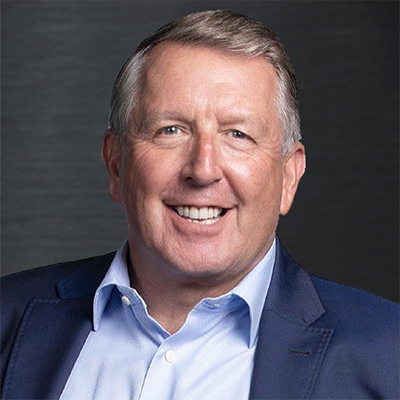
Martyn is an experienced global CMO with 30+ years of product, channel and corporate marketing in the technology sector. He is known for building world-class international teams, and has a proven track record of driving revenue, brand and market share growth. His specialties include: Company level strategy and policy development though to operationalization, Go-to-market strategy, segmentation, product management, marketing, corporate marketing and communications, branding, messaging and positioning. Demand generation, sales enablement, channel marketing and development, digital and social media marketing. Martyn is recognized by The Economist as one of the Top 25 Social Business Leaders, by Forbes as one of the Top 50 marketers, and by BtoB Magazine as one of the World's Best Marketers. His work has been profiled in books on marketing; including John Ellett's "The CMO Manifesto," and Dr. Dave Chaffey's "E-Marketing Excellence."
Please login to join the discussion
Comments
No comments yet.