VASU READ
Regional Holistic Content & Communications Lead
Nestle
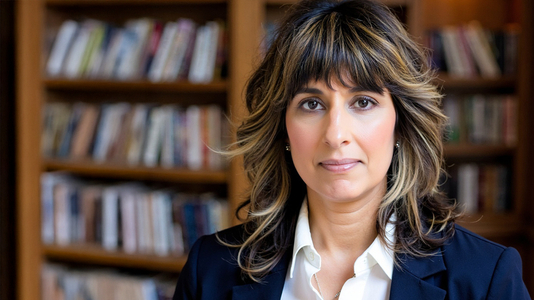
Vasu Read is a Marketing and Communications Executive with over 15 years of cross-sector leadership across EMEA and APAC. She has consistently transformed and shaped data-driven, consumer-centric strategies for some of the world’s most iconic FMCG and Luxury brands. Currently, she oversees 30 European markets for globally renowned coffee brands — Nescafé, Dolce Gusto, Nesquik and Starbucks — leading integrated content and communications. Her unwavering focus on consumer insight and data-led decision-making has driven increased share of voice, brand equity, and profitable growth. At Nestlé, she spearheads hyper-personalised creative analytics performance marketing, incorporating large language models (LLMs) and shaping the AI roadmap across the regional operating model to increase efficiencies and speed to market. Her transformative, solution-oriented mindset has achieved significant brand and business results at scale while maintaining global brand iconicity as well as local cultural relevance. Previously, she led the launch and growth of multiple food and beverage brands across UK and Ireland with strategic ownership of 3–5 year (MBS), significant P&L accountability, and category portfolio expansion as well as leading the growth in new segments. Her expertise also spans the direct-to-consumer luxury space, notably with Nespresso, where she drove the B2B2C agenda and reinforced brand positioning across both professional and consumer.
CMO COUNCIL: What skills and qualities does a cross-functional marketing leader need today?
READ: While it may appear that marketing is undergoing a transition, the deeper shift lies in how businesses are restructuring their organisations to accelerate speed to consumer and deliver measurable business outcomes. This evolution demands a new kind of cross-functional marketing leadership. Today’s leaders must champion functional integration — fostering open collaboration, continuous learning, and shared expertise across departments. Success hinges on building trust, embracing agility, and cultivating a transformative mindset that welcomes change and challenges conventional thinking. Crucially, marketing leaders must help drive a cultural shift where every function sees itself as a brand builder and a contributor to business growth. This means aligning teams around common goals, empowering them to act with consumer-centricity, and ensuring that marketing is not a silo but a strategic enabler across the organization.
CMO COUNCIL: What factors have contributed most to your success?
READ: To be successful you need to have an inquisitive mindset in continuously understanding the behaviors of our consumers, with deep consideration of the micro and macro influences, this thinking, backed by data and insight is one which I place at the forefront of every decision and has contributed to much of my success. My personal drive and career ambition is an infectious enthusiasm which I have used to be at the forefront of marketing. In all cases it has given me the license to challenge the status quo and ensure we as a business and myself as a marketer are pushing boundaries. Admittedly it is exhilarating, you have to have a mindset of continuous agility and transformation, of which I embrace as a catalyst for growth.
My career has been intentionally holistic, spanning D2C, FMCG, agency, and commerce. I believe to be a truly disruptive marketer; I must understand the foundational principles of marketing and use them to connect more deeply with consumers while delivering on business objectives. As the industry shifts toward CX and marketing fundamentals from the 80s (consumer insight, brand, creative excellence and personalization both offline and online), I’ve had the privilege of leading CX initiatives across content and communication for some of the world’s largest coffee brands in Europe. This role has allowed me to draw on my accumulated knowledge and apply it in ways that drive both brand, business and long-term consumer relationships.
CMO COUNCIL: Which digital marketing innovations are most enabling your go-to-market process, customer value creation and campaign performance?
READ: In large-scale businesses, each market presents unique nuances — from consumer need states to market maturity levels and communication styles. Success requires a delicate balance between local relevance and global efficiency, scale, and brand consistency. To enable rapid and effective go-to-market execution, building robust operating models that integrate market understanding at the front end of our end-to-end processes is key.
Innovations in AI allow us to tailor relevance down to the pack level, while ensuring compliance, governance and safety. By combining first-party data with AI, we’re able to produce and target hyper-personalized creatives and communication that resonates across diverse consumer segments. Experience Management (XM) platforms further enhance our capabilities by aggregating valuable data into intuitive dashboards which can be optimised at speed.
While technology plays a critical role in modern marketing, it must be grounded in human insight. Consumers are emotionally driven and seek connection and belonging. Digital innovation should serve as a gateway to delivering better experiences and consumer closeness— ultimately creating more value for both the consumer and the business.
CMO COUNCIL: What’s the best piece of career advice you’ve been given? Or what career advice would you give to emerging marketing leaders?
READ: Stay at the forefront of the industry by continuously tracking consumer trends, emerging technologies, evolving platforms, consumer behaviours and micro and macro influences. Be agile and transformative — the best leaders adapt quickly and challenge convention. Go above and beyond in upskilling yourself, both through formal learning and by absorbing insights from those around you. Stay curious, stay humble, and never stop asking how you can continuously get closer to the consumer.