POV

August 13, 2026
AI Raises Tension for CMO as Brand Steward
For years, the industry has treated marketing leadership as a balancing act between two competing archetypes. On one side is the brand steward: the executive charged with protecting voice, shaping perception and building long-term equity. On the other is the growth operator: the performance-minded leader expected to justify spend, defend outcomes and drive revenue growth with ever-greater precision.
Artificial intelligence is intensifying the tension between the two. Much of the AI conversation in marketing still defaults to generic promises about productivity and personalization, even as the technology is already reshaping behavior at scale. McKinsey found in 2024 that 65% of organizations were regularly using gen AI in at least one business function, with marketing and sales among the leading use cases, while Google said in 2025 that AI Overviews in Search had reached 2 billion monthly users.
Yet many marketers are still stuck with broad predictions rather than clear operating answers as to where AI changes changes decision-making, and what that should mean for budget, measurement and organizational design. Meanwhile, AI is quietly redefining how they are judged.
Marketing has long benefited from a certain amount of ambiguity. Brand building has always involved judgment calls that resist neat quantification. Marketing leaders have often been asked to speak two languages at once: the language of emotion, positioning and cultural relevance, and the language of financial performance, spoken in the board room. In many organizations, that tension has produced an uneasy truce. Everyone agrees that brand matters, but the metrics used to defend it rarely map cleanly onto the metrics that finance teams trust most.
AI is making that middle ground harder to occupy. As AI systems move deeper into planning, creative development, audience analysis, forecasting and organizational workflows, they are beginning to handle more of the heavy lifting in campaign execution and decision support. Marketers are already integrating AI across media planning, creative, activation and measurement, and Google has published architectures for AI-generated campaign content and analytical workflows.
Growth Mindset
What these systems do not replace is managerial judgment. They can generate options, surface patterns and accelerate output, but they cannot by themselves decide which message is right for the moment, which forecast is trustworthy, or which recommendation strengthens rather than dilutes the brand. Perhaps they will, one day. But not yet.
Much sooner, AI will make loose logic and soft accountability much harder to hide behind. If AI can surface inefficiencies across the business, compress time to insight and reveal where spend is or is not producing measurable movement, then marketers will face more pressure to articulate how their work contributes to growth in terms the rest of the business can understand.
This is why the old framing of the CMO as a kind of glorified brand custodian is becoming obsolete. In more companies, marketing leaders are being asked to act less like communications specialists and more like general managers. The title may still say CMO, but the expectations look increasingly like those of a chief growth officer: align investment with outcomes, translate strategy into commercial impact and defend decisions with evidence.
As AI makes content production cheaper and faster, the strategic challenge for marketers is not simply volume or efficiency. It is preserving authenticity. Research has found that when consumers believe emotional marketing communications were written by AI rather than a human, positive word of mouth and customer loyalty decline.
That is a useful line for marketers: AI may be well suited to accelerate production, variation and operational tasks, but human judgment becomes most valuable where brand communications need to feel original, credible and emotionally resonant.
That is the real transformation underway. AI is not pushing marketers to choose between brand stewardship and growth leadership. It is removing the luxury of pretending those are separate jobs.
Vlad Strelsov
CTO of Attain
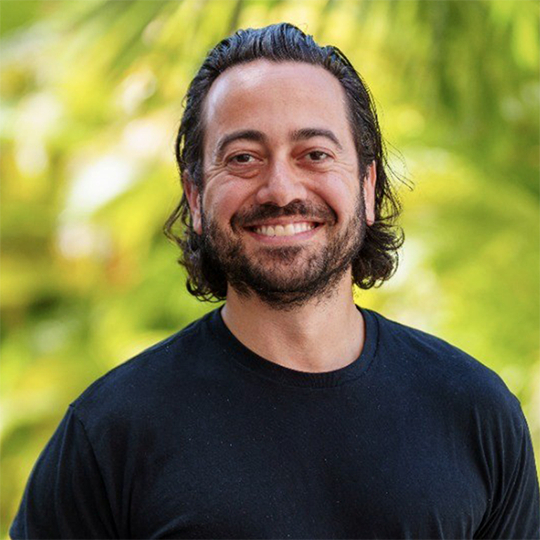
Vlad Strelsov is Head of Revenue at retail purchase data provider Attain. He has 15+ years experience building, scaling, and leading sophisticated teams across the spectrum of major digital and traditional media channels.
Please login to join the discussion
Comments
No comments yet.
Premium Membership
If you are a registered CMO Council member, upgrade to a Premium Membership. Not only will you gain access to this report, you will also gain access to over 300 full data reports and studies. Premium membership delivers access to all reports, the CMO Council Insight Center and the private mentorship community, CMO+.
Library Subscription
If membership is not the right fit, a library subscription provides access to the reports and content you value. As a subscriber, you will gain unlimited access to all CMO Council content, including over 300 reports, executive summaries and white papers as well as unlimited access to thousands of data points and articles in the curated Insight Center.